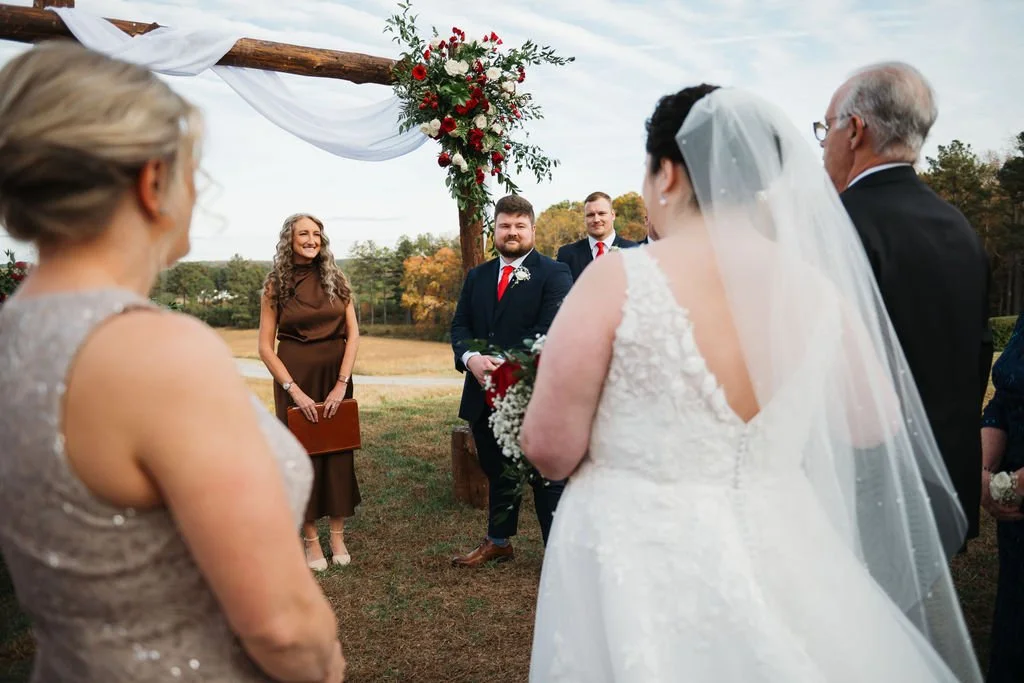
The music, the lighting, your carefully curated signature craft cocktails... You spend months of time planning how a wedding will look and feel once the party begins. But the energy of a wedding quietly reveals itself earlier… in a moment most couples don’t realize carries so much weight.
Marriage laws vary in every state and your license must be obtained within the state in which you’re getting married. Even though D.C., Maryland, and Virginia are in close proximity to each other, the requirements to obtain your license vary greatly. In addition to that, each location has different laws as to who can actually marry you.
Thinking of having a friend officiate your wedding in Virginia? Be careful—Virginia has strict laws about who can legally perform a marriage ceremony. Many couples don’t realize that their loved one may not be authorized, and the “one-time officiant license” is often denied. In this post, we explain Virginia’s officiant requirements, what happens if your friend can’t legally officiate, and how to ensure your marriage is valid.
You’ve heard it before: “Weddings go by in a blur.” And it’s true—when everything is packed into a single whirlwind day with hundreds of guests, it can be hard to take it all in.
But what if you didn’t have to rush? What if your wedding day could actually feel intentional—not just planned, but present, grounded, and totally you?
For many couples, that’s the appeal of an intimate wedding. Fewer guests doesn’t mean fewer memories. In fact, it often creates space for more connection, more creativity, and more meaning—especially when it comes to your ceremony.
As a humanist celebrant, I’ve seen firsthand how deeply moving and elevated small weddings can be. Here’s how an intimate celebration allows your ceremony to shine as the true heart of your day.
Want your friend or family member to officiate your wedding? Here’s how to make sure it’s legal, seamless, and actually meaningful—with tips from a professional wedding officiant.